The book
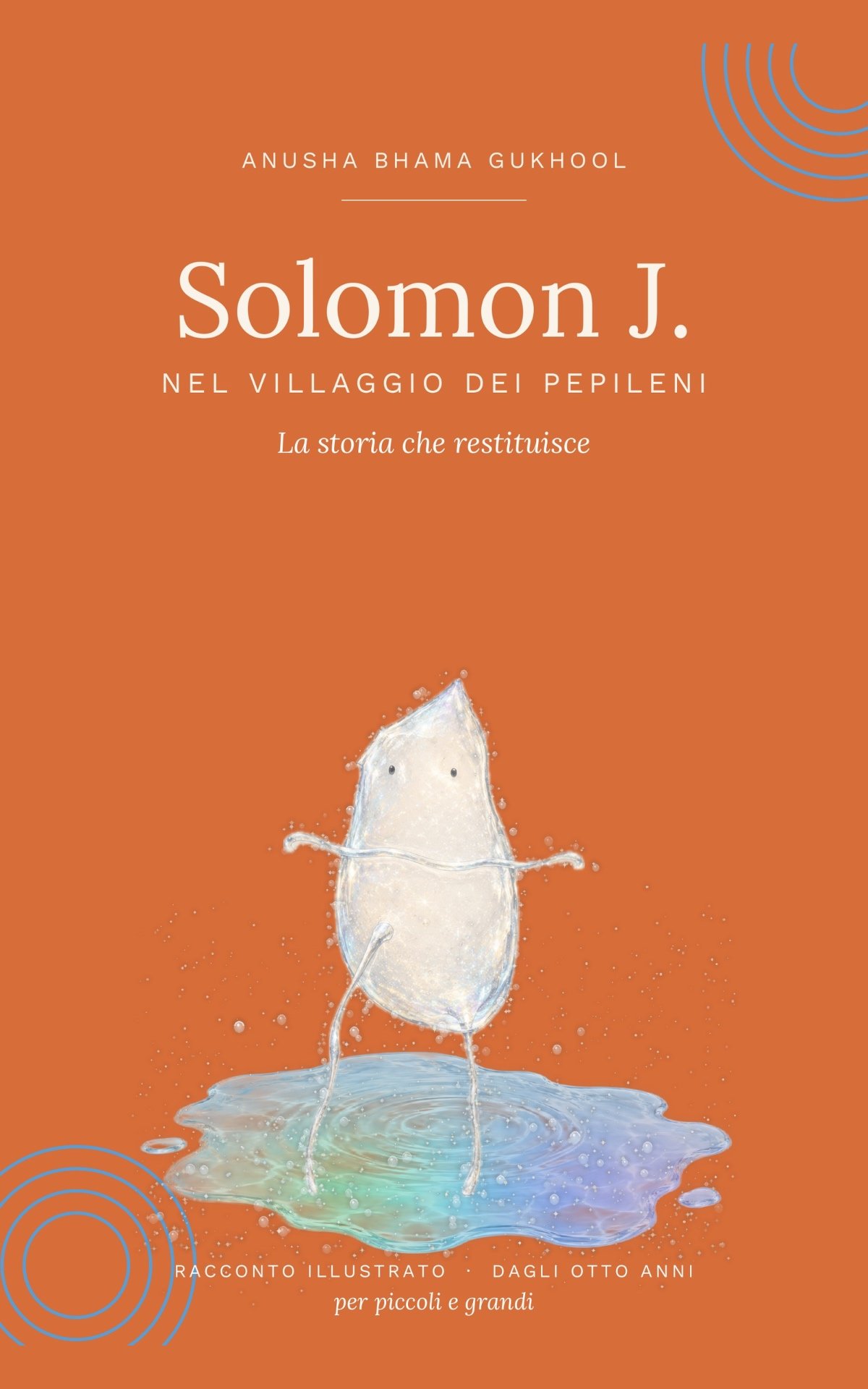
Solomon J. nel villaggio dei Pepileni, a symbolic fairy tale about childhood, sensitivity and giftedness
Buy
Bring it home today
- Paperback edition, Amazon KDP, 2025
- ISBN 9798289918543
- Shipping and returns handled by Amazon
One click, and you are on the book's page on Amazon.
A fairy tale with two voices
The satisfaction of a somersault
Solomon J. nel villaggio dei Pepileni is a fairy tale that will give you the same satisfaction you feel after doing a somersault.
Is it a fairy tale for children? It is. Is it for adults? Definitely yes. Adults looking for a map they can feel is right for them, to connect with themselves and with the youngest ones. It is a fairy tale with two voices: one voice will speak to the adult, and only the children will hear the other one, through a symbolic journey.
The main character is Solomon J., a Sunchild. In the fairy tale he discovers that the sun and its intense light represent the overwhelming energy that covers so many children considered «too much», just like him. He learns that a Sunchild grows better when someone knows how to recognise his light early enough to teach him to keep it safe, steer it and share it.
A recognised light can become direction, a map. Solomon J. enters a place where his inner intensity finally finds an outer form able to welcome it.
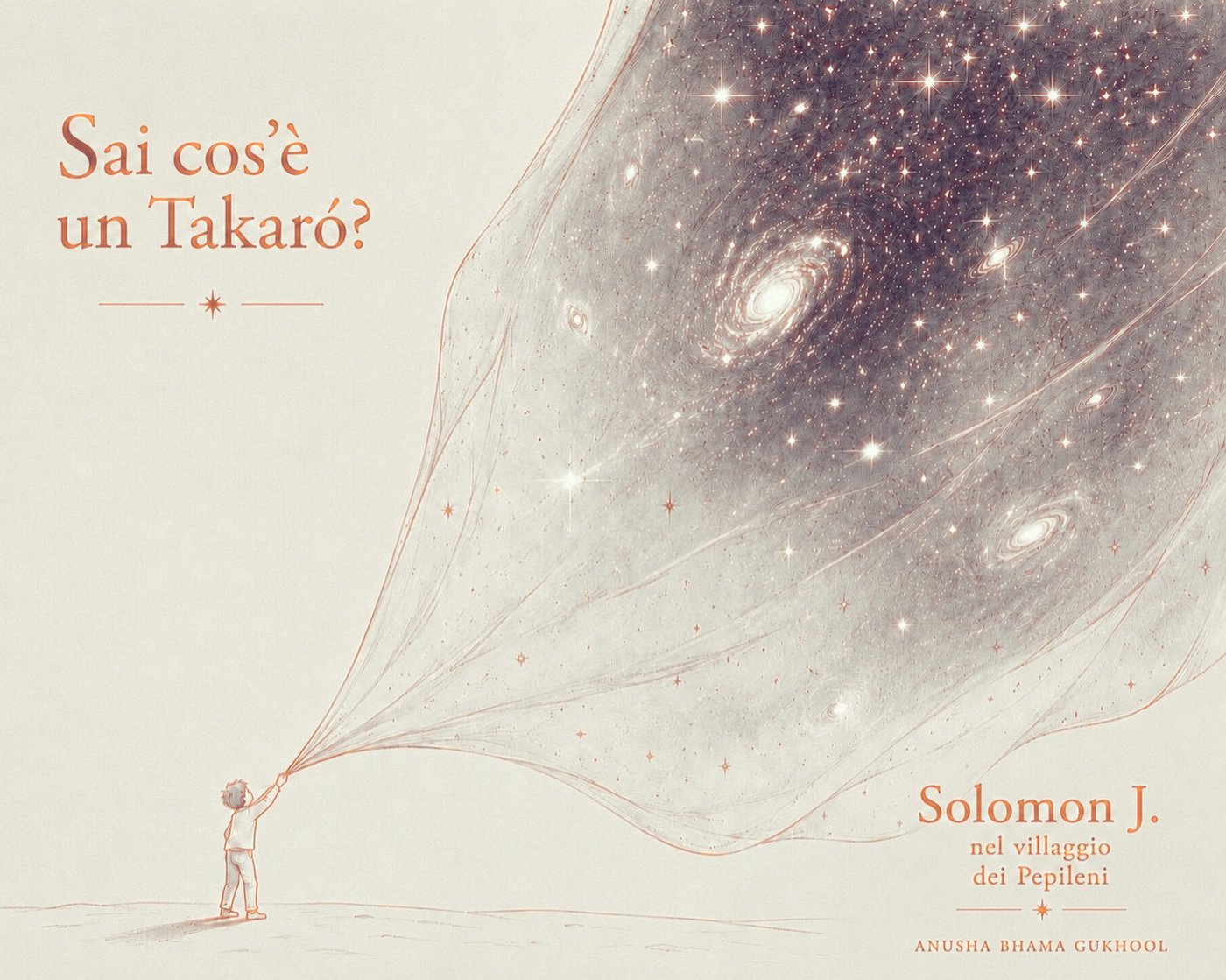
The Pepileni build bridges, appreciate differences, recognise the original worth of every creature they meet, because it is they who keep the Takaró: the piece of the Universe that gathers the memories of the inner greatness we are born with. Greatness is understood as a starting point, even before being a destination or a goal. It is a different point of view in the fairy tale landscape, where the aim is usually to reach a goal that improves the starting conditions.
What used to create distance, being different and intensity, becomes language. What seemed excessive finds a form. What the child kept inside, closing himself in a bubble, can finally enter into relationship with others.
Where it comes from
A story that gives back
This book was born in a house where a mother and a child learned to speak the same language. Solomon J. asked big questions, the kind that stay hanging in the evening air, and I needed words able to hold them. That is how a mythology was born: a village, small beings called Pepileni, a map to walk. From there, the story went on growing until it became a book.
The fairy tale tells the journey of a child who crosses worlds to understand where adults go when they move away. He meets the Sunrise Pepilene, discovers he is a Sunchild, enters the Alcolà Glacier, learns that bridges can be built alone too. In the end he reaches the discovery that makes the rest of life lighter: the parents' map belongs to the parents, and every child walks towards their own greatest good.
The second part of the book raises the curtain. Characters, places and symbols are taken up one by one and read in the light of what really happens in families: the loneliness of those raising a child without a network, the body that speaks before words, absence that takes the shape of a giant, care that depends on the quality of the imprint more than on the amount of presence. Each section closes with a practical space for adults, with concrete gestures to bring into the day.
The book therefore speaks to two readers at the same time. To the child it offers a story to listen to, with images, linguistic inventions and an ending that gives back. To the adult it offers a kind mirror and tools, because the village every child needs begins with the people who decide to stay.
May beautiful thoughts take us far.
Extract
Introduction
When a child is born, it takes a whole village to raise them. Or so they say, somewhere in the world. But what happens when the village is not there, and a mother finds herself saying: «If that is true, then I am my son's village»? When Solomon J. was born, he had plenty of curious visitors, but no one really stayed. Yet even in a «town of dead dogs», as Pamela calls it, a person who could go to a funeral and still struggle to hide her high spirits, motherhood can hold a beauty of its own.
Little Solomon J. needed a mythology of the absent to learn about the places where some grown ups get lost, playing hide and seek in life.
Summary
Solomon J.'s journey
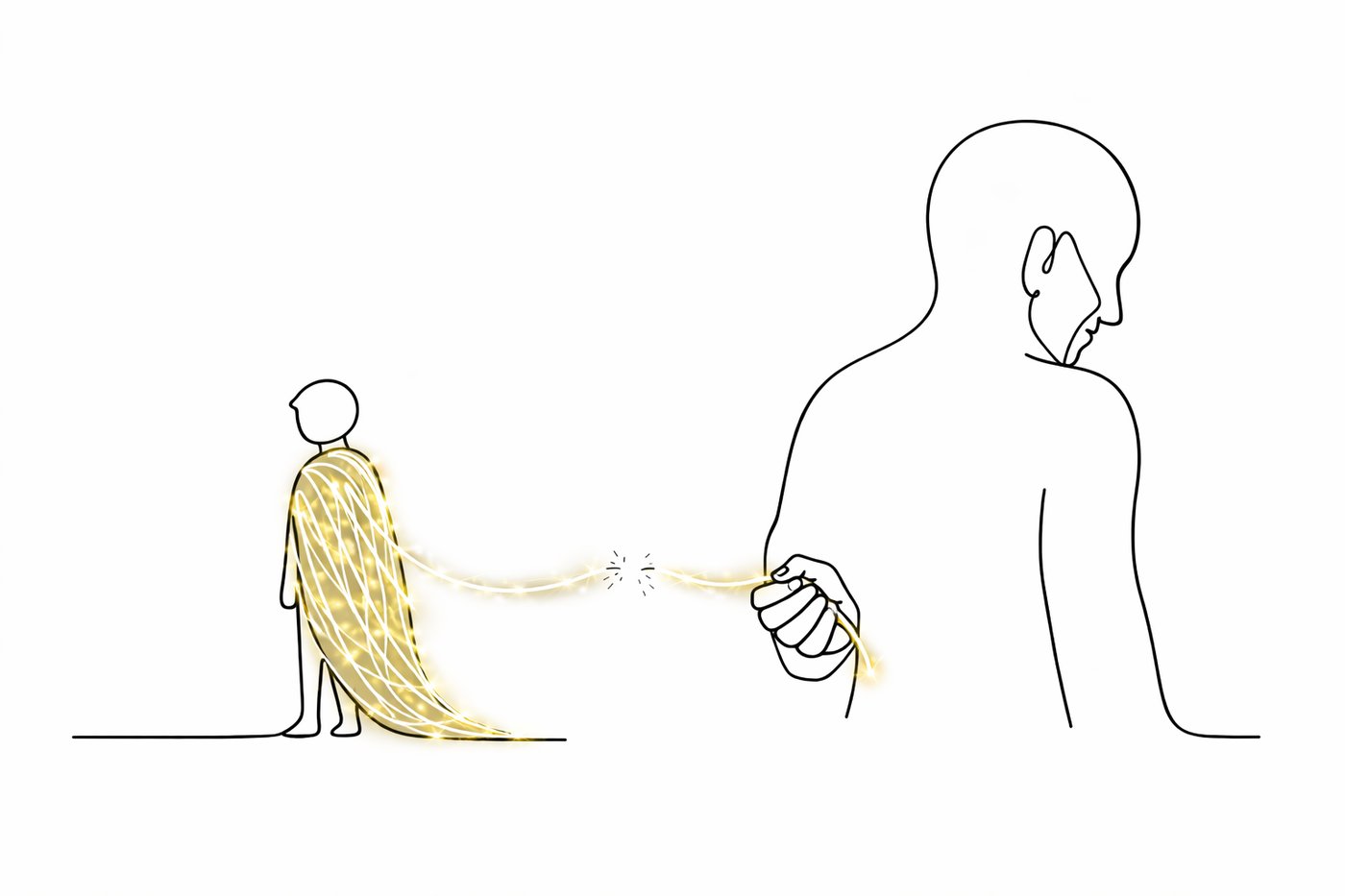
Solomon J. nel villaggio dei Pepileni is the story of a child whom a Pepileno calls by name and takes to Pepilandia. There he will meet the Giant, his father, in the ice of the Alcolà; he will find Shadow again, the part of himself that stayed inside the bubble; he will embrace Layla again; he will discover the bridges that tie play to what matters to him. He comes home with affection, memory, curiosity and imagination found again, and with a growing trust in what he feels: it is the story that gives back.
Narrating voice
A polyphony of gazes
Solomon J.'s life and his relationships open through a multiplicity of gazes and perceptions. The narrating voice accompanies without overlapping: it lets human, animal and fantastic personalities speak, and keeps their difference safe.
In the book, perspectives far apart live together in balance, and precisely in this coexistence each voice receives value and dignity. The reader enters a polyphony they come to recognise as their own and, once the book is closed, will meet in everyday life the same mechanisms, the same personalities, the same variety of voices they learned to listen to in the fairy tale.
Genuine innovations
The mythology of the Takaró, and other new things
This fairy tale introduces elements that do not belong to the well known repertoire of children's literature. The first is the birth of an original mythology: the Takaró. The other innovations will gradually find their own dedicated space.
Three reasons to read it
- I
A language that belongs to children, and that adults recognise with equal intensity
- III
An Italian contribution to the literature on giftedness
- IX
A dual resource, for children and for adults
One more reason
With this book you support a single mother raising her child
By reading Pepileni you become part of a true story that is still unfolding: every copy you buy supports a mother raising her child on her own, and helps, day after day, to rebuild a village that works.