A closer look for parents and teachers
How to recognise a gifted child, signs and tools
High cognitive potential affects a minority of the child population. Estimates vary according to the definition and the criteria adopted for identification. In most cases it remains invisible, and children go through primary school waiting for someone to give a name to what they are living.
Recognising a child with high potential means reading their reactions as a request for meaning, and for the adult it means changing grammar.
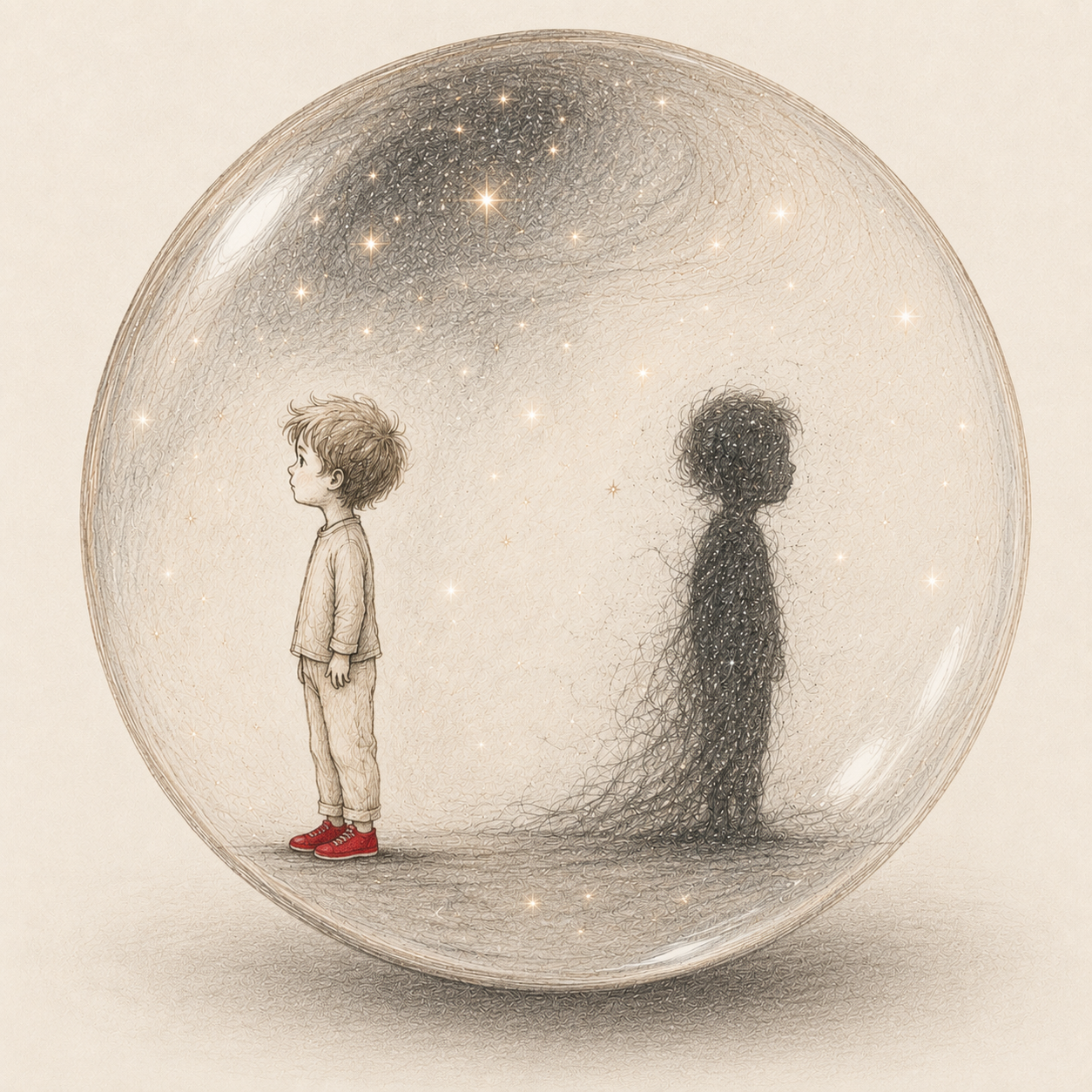
Ten signs to watch for
Every child shows some of these: three, five, seven. What matters is the intensity and consistency with which these signs repeat over time.
- 01
Early emotional intensity
Reacts to their own and others' emotions with an intensity out of proportion to their age. Cries at an injustice they've heard about, is moved by an injured animal, feels a sense of responsibility wider than that of their peers.
- 02
Existential questions from a young age
Asks about death, time, infinity, why evil exists, well before the age of six. Seeks deep answers and returns to the same question weeks later.
- 03
Rich and precocious language
Builds complex sentences very early, uses rare words, loves word games, picture books with long text, dictionaries, etymology.
- 04
Deep curiosity about a few subjects
Doesn't cover many topics superficially but a few in great depth: dinosaurs, space, mythology, insects, ancient history. Studies alone, memorises details, corrects adults.
- 05
Perfectionism and frustration
Wants the drawing to be exact, the puzzle to end just one way, the game to follow the rules. Faced with a result that differs from expectations, they give up abruptly or cry: they live the distance between what they imagine and what they can achieve.
- 06
Acute sense of justice
Cannot tolerate injustice in the classroom, defends the weaker ones, challenges rules they consider arbitrary. This often puts them in conflict with teachers and peers.
- 07
Sensory sensitivity
Clothing labels, bright lights, noises, smells, the texture of certain foods bother them more than usual. This is a frequent feature of high potential.
- 08
Loneliness and a sense of being different
Feels different from classmates. Prefers to talk with adults or older children. May seem shy, or the opposite, dominant, because they struggle to find peers on their level.
- 09
Difficult sleep, a mind that never switches off
Struggles to fall asleep because they are thinking. Asks questions in bed, processes out loud, needs long rituals to quieten the mind.
- 10
Uneven school performance
School performance can be inconsistent: some gifted children get bored, get distracted, receive mediocre marks; others develop performance anxiety. The grade, on its own, says little.
If you recognise this in your child or a pupil, what to do
Observe without labelling
Keep a small diary of situations that struck you. There's no need to interpret, only to document. It will help whoever supports the child later.
Consult a professional
A developmental psychologist or a professional qualified in high potential. An assessment gains meaning when it integrates standardised tools, developmental history, an interview and professional interpretation of the overall profile. Online tests used in isolation cannot identify high potential.
Talk to the school
Teachers and head teachers are valuable allies once they have the right information. In Italy, MIUR Note no. 562 of 3 April 2019 acknowledged that pupils with high cognitive potential may be considered within Special Educational Needs when specific educational needs emerge; any personalised plan is assessed by the teaching team for the individual pupil.
Readings and resources
- John Bowlby, on attachment theory and the secure emotional base.
- Donald Winnicott, on the false self, play and the function of the good enough environment.
- Kazimierz Dąbrowski, on the theory of positive disintegration and the concept of overexcitability, subsequently studied also in relation to high potential.
- Lev Vygotsky, on the zone of proximal development, a reference for tailored teaching.
- Solomon J. nel villaggio dei Pepileni, the fairy tale by Anusha Bhama Gukhool: a symbolic way to tell a child, and their family, about giftedness.