Genuine innovations
What does it offer that is original?
Discover some new elements in this literary landscape.
The story's innovations
An innovation
The Takaró
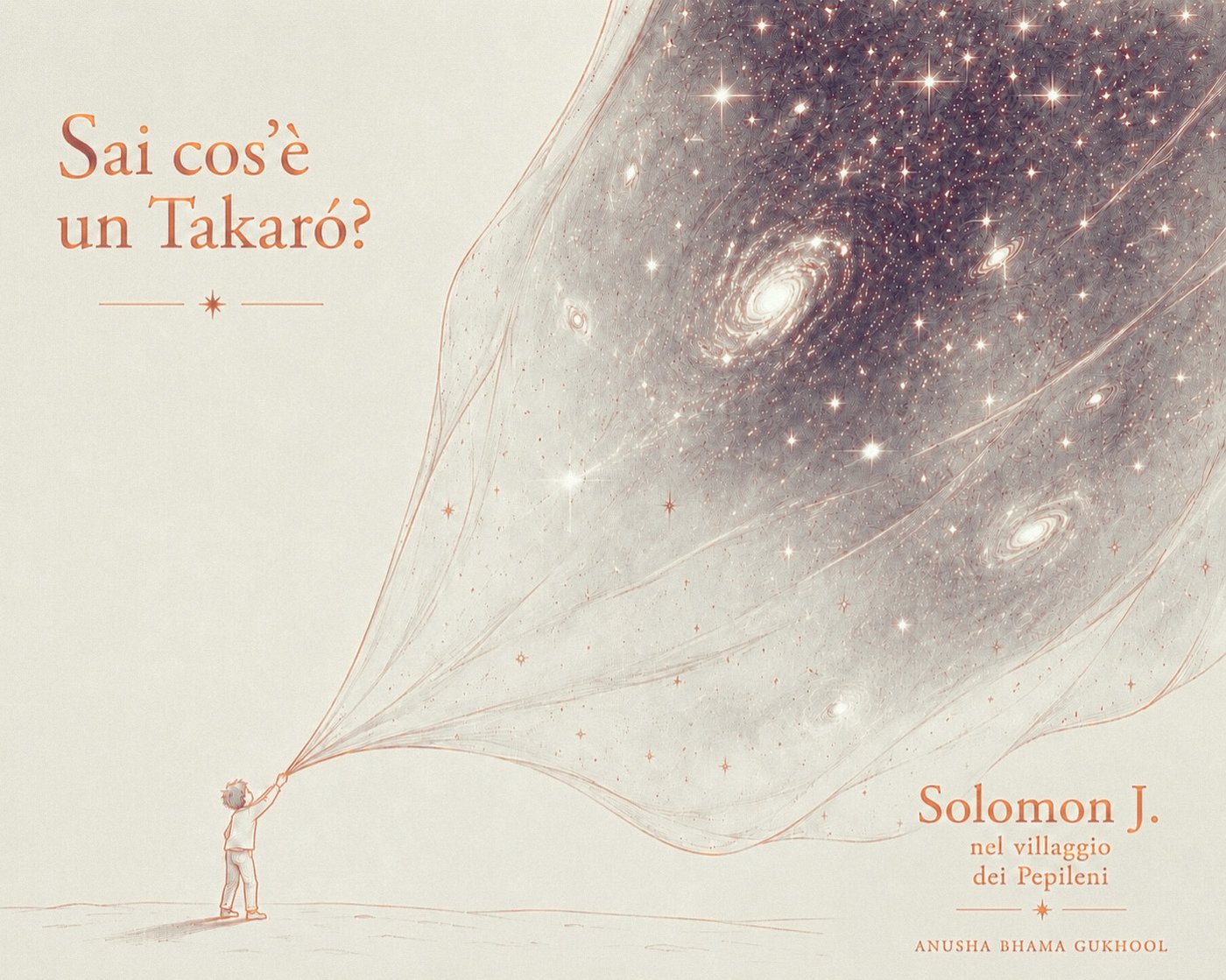
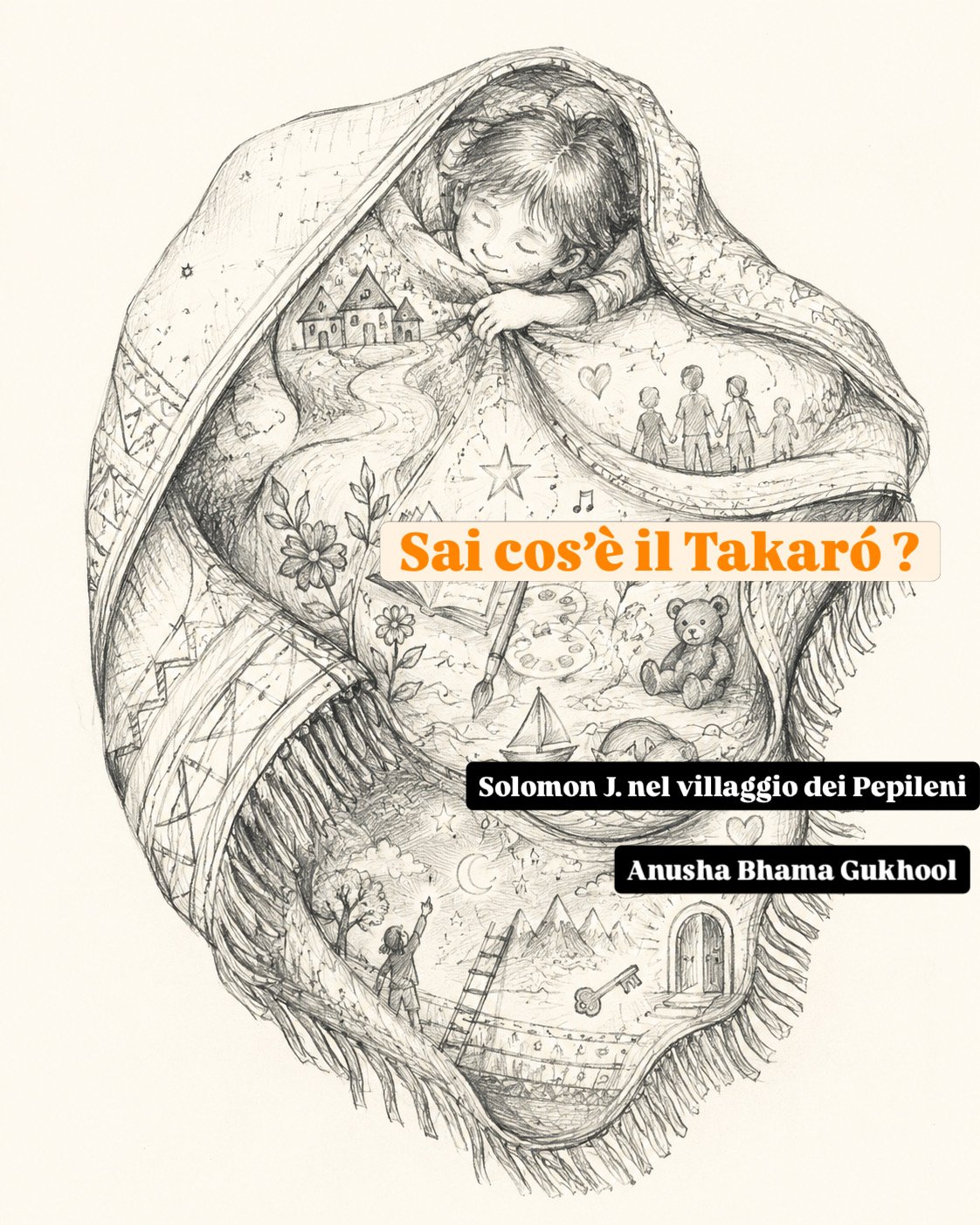
The Takaró is the gift every child receives at birth: an invisible weave made of bonds, sensitivity, talents, desires and possibilities. Over the course of Solomon J.'s journey, this gift gradually turns into a personal responsibility.
The Takaró represents what we inherit, but also what we choose to keep, enrich and become. That is why, when the Pepileno Cucù returns it to Solomon J. and tells him, «You will have to look after your Takaró», the symbol completes its transformation, turning from an inherited legacy into an individual responsibility.
The Takaró offers the child the chance to become an able, responsible author of his own story.
Different paths, the same origin
Even when two people are bound by something great, they may find themselves walking very different paths. Love takes shape precisely in the ability to recognise that each of us follows our own road.
Solomon J.'s father remains immersed in his own world, while the child comes to recognise that his road lies elsewhere. Will he choose to flourish? Will he learn to keep and protect the beautiful things he holds? How will he come back whole after being hurt?
An innovation
The Pepileno and its world
Alongside the Takaró, the story introduces another symbolic figure destined to remain in readers' imaginations: the Pepileno. It is a creature with a gentle name, one that echoes an affectionate sound bound up with childhood, and it carries with it an entire universe populated by presences, places and passages named within this narrative universe.
Every element of this world is a discovery the book holds in store for the reader:
- Pepilandia, the village that welcomes what elsewhere struggles to find its place.
- The Pepilene of the Sun, luminous presences who speak a language all their own, worth listening to.
- The Bridges, crossing them holds a surprise the book keeps for the reader.
- The Zanzabalene, creatures with an unexpected name, who open an original fold in the tale.
- The Pepifante, a figure the reader will recognise on entering the village.