Gallery
The story's images, the plates from the village of the Pepileni, told one by one
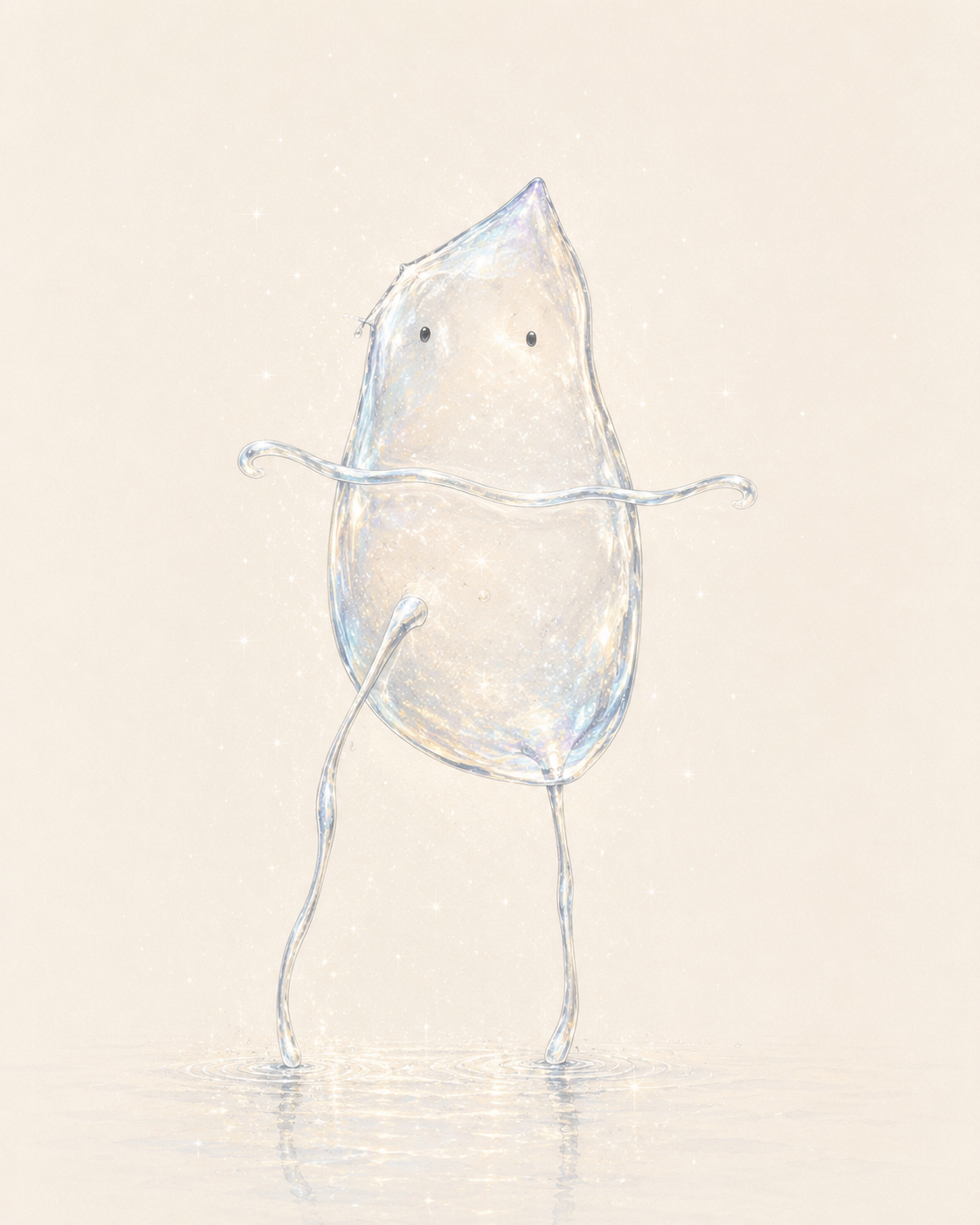
The Pepileno
The Pepileno is that creature who comes near you when you are small and then never leaves, because it always returns when you need to look at the world with the same eyes you had as a child.
It returns when you go searching for answers, when you feel a crack widening and you refuse to give up.It returns when you don't know what to say and feel yourself crumbling, and then it gathers you up and helps you join the dots and see once more a special picture while others see only a scribble.
The Pepileno is what you dream of keeping forever without ever losing it. It is what allows us to remain, wholly ourselves, here and now.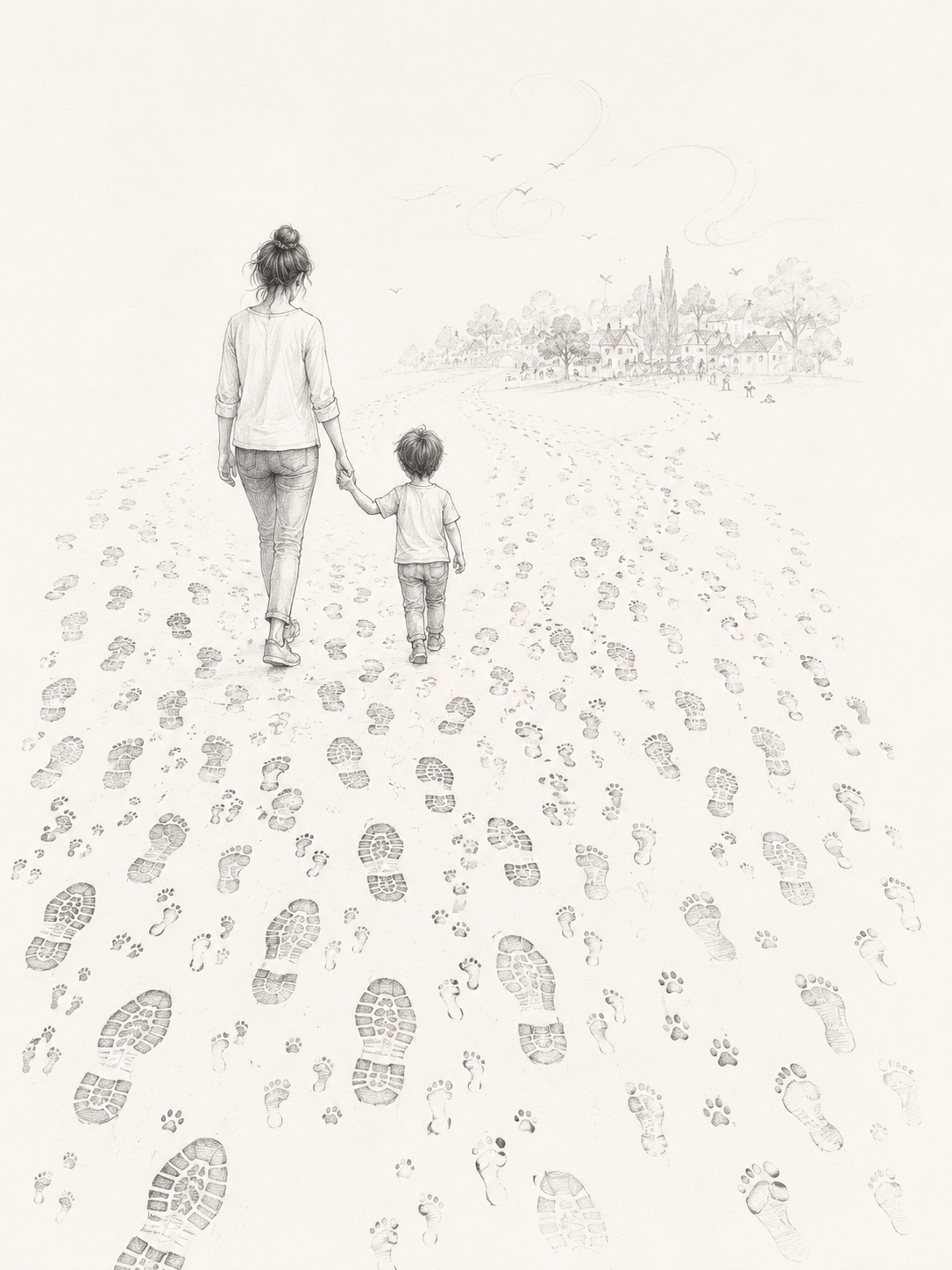
The village that did not work
Little Solomon J. walks with his mother through a desolate village. Their passage leaves many footprints, and all around them lingers a bleakness, the sign that no one has truly stayed. A village that does not work. What can a village that does not work give back?
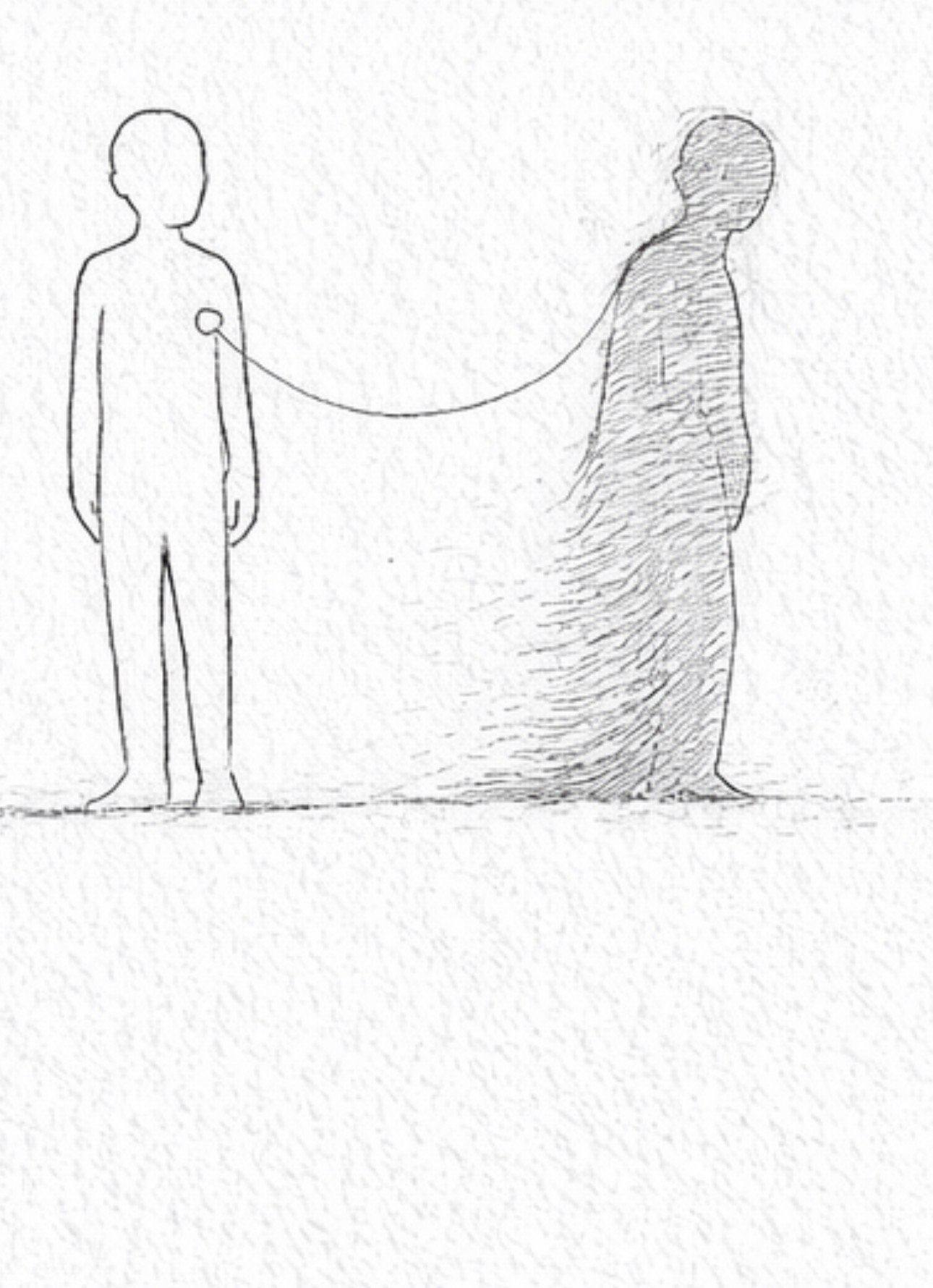
Who should we stay bound to?
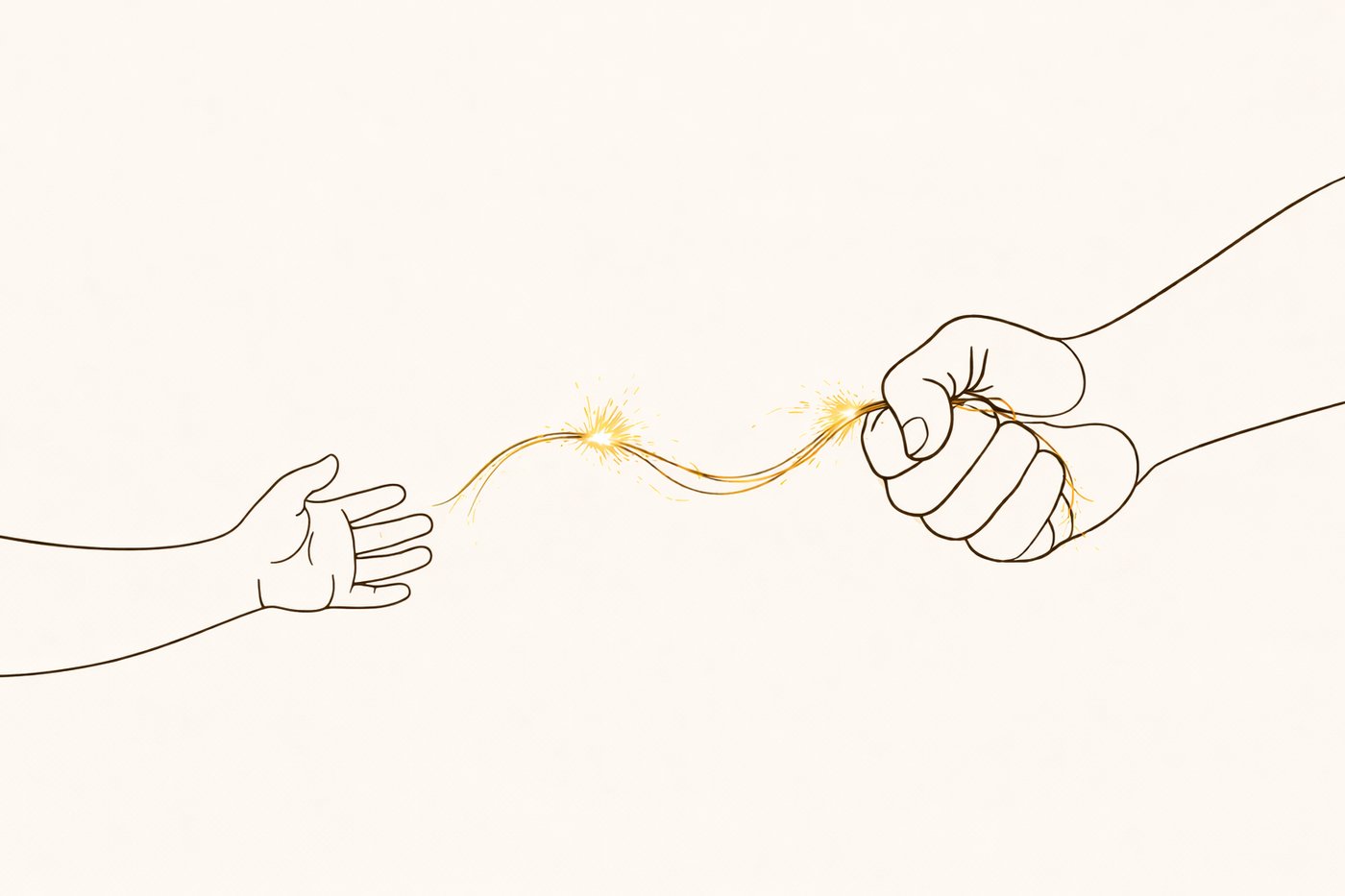
When you cannot save another, you must save yourself
This is the moment when little Solomon J.'s shadow hands the giant a piece that belongs to it. The very instant it does so, it understands that he would have destroyed it. To find out what happens next, the book awaits you.
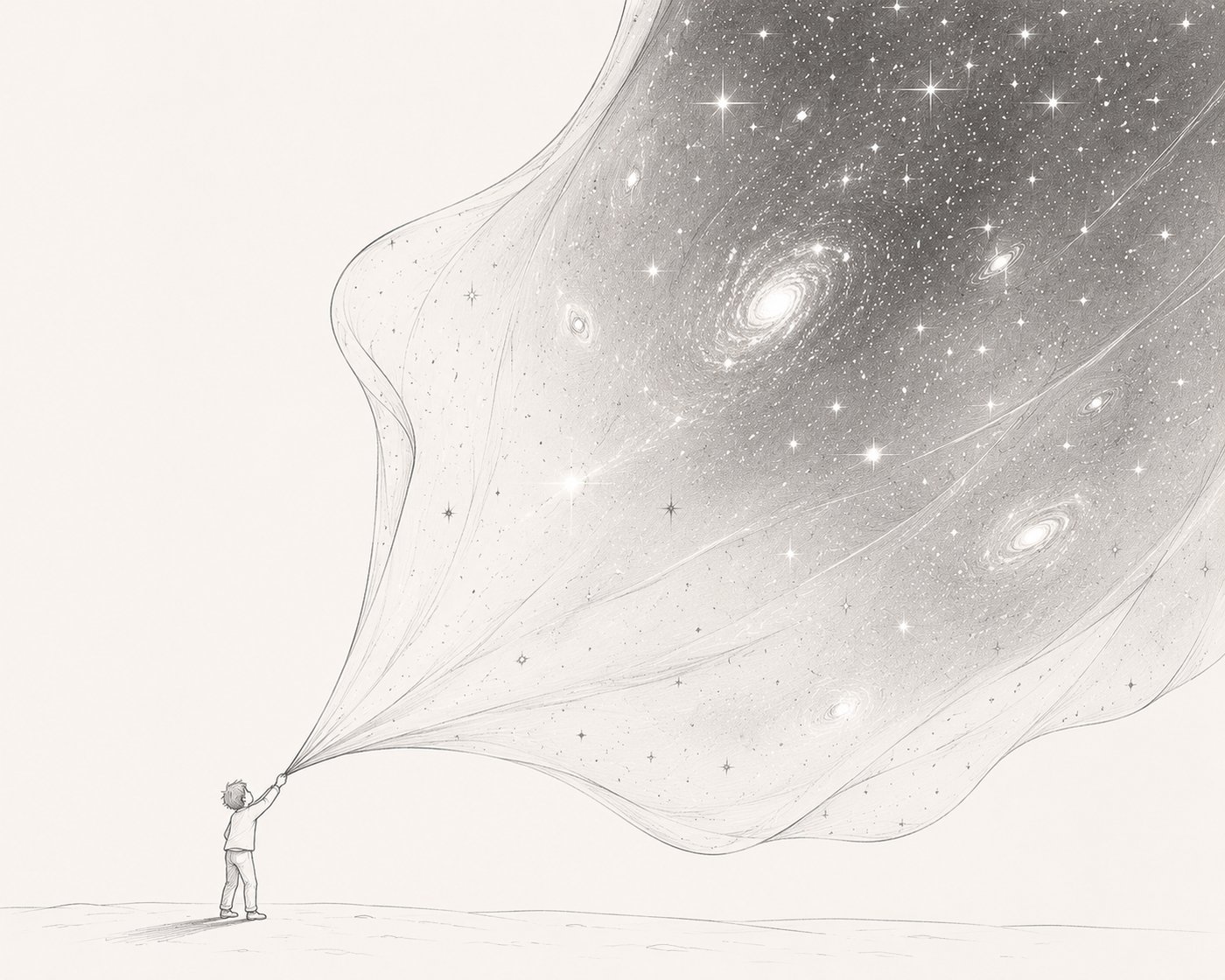
Every child's Takaró
The Takaró is the new symbol of the story «Solomon J. nel villaggio dei Pepileni» and represents its most important innovation. It holds the memory of the greatness with which every being comes into the world, and in the story takes the form of a blanket full of shining sparks. In everyday life its message stays simple: greatness dwells within every child from the very first instant, as a natural inheritance and a living part of who they are. It is a point of origin, even before it is a destination, and everyone can recognise it and carry it within.
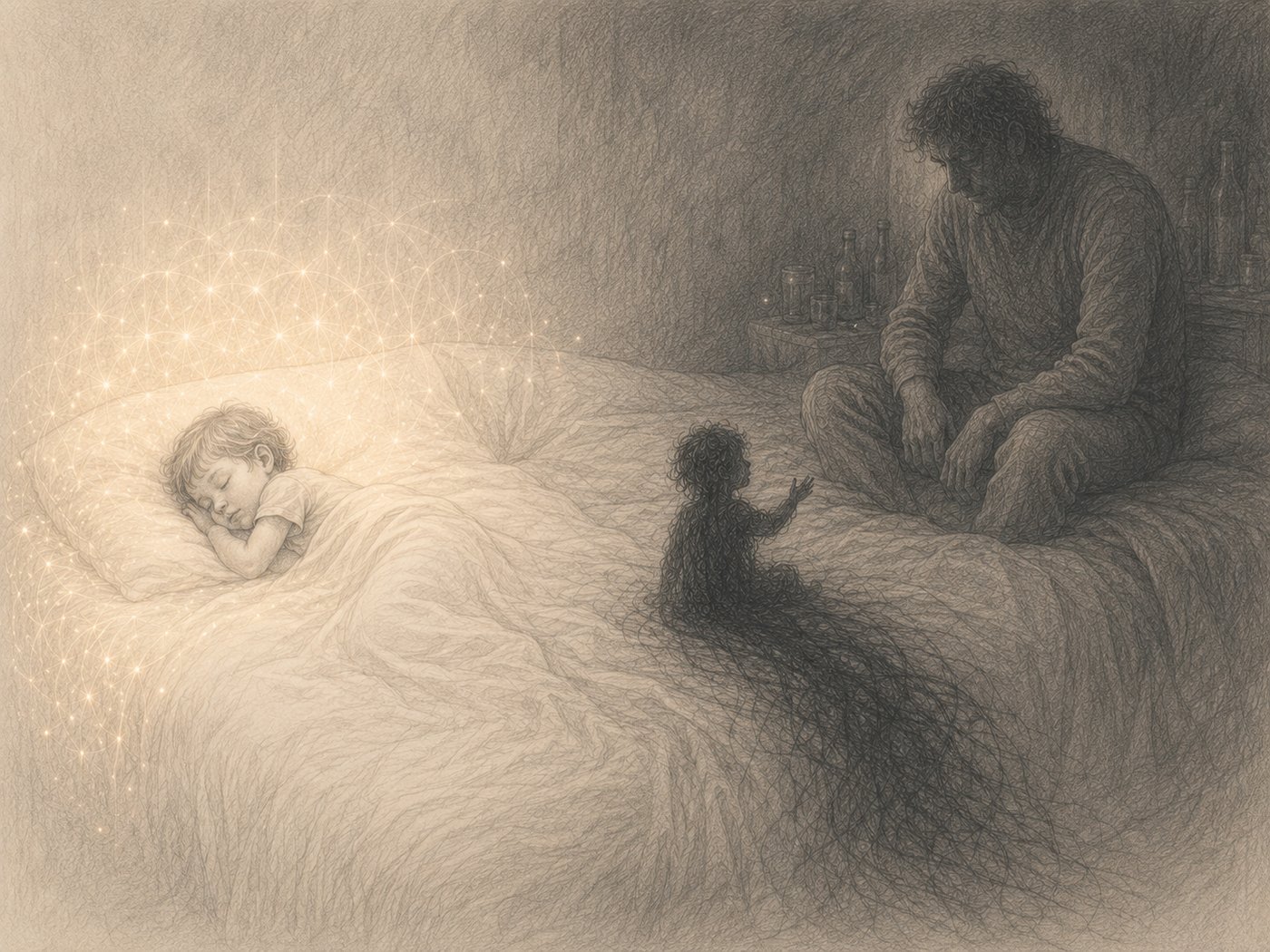
A shadow seduced by the giant
Little Solomon J. sleeps wrapped in golden light, while his shadow, always independent of him, speaks with his father. In the story, the giant represents this great, distant, absent father figure, who is nonetheless able to reach the child's psyche by a path all his own, a subtle path that creeps into his life. Solomon J. carries with him a question that hurts him: if he had found him, would his father have stayed? He who would have so, so wanted a father.
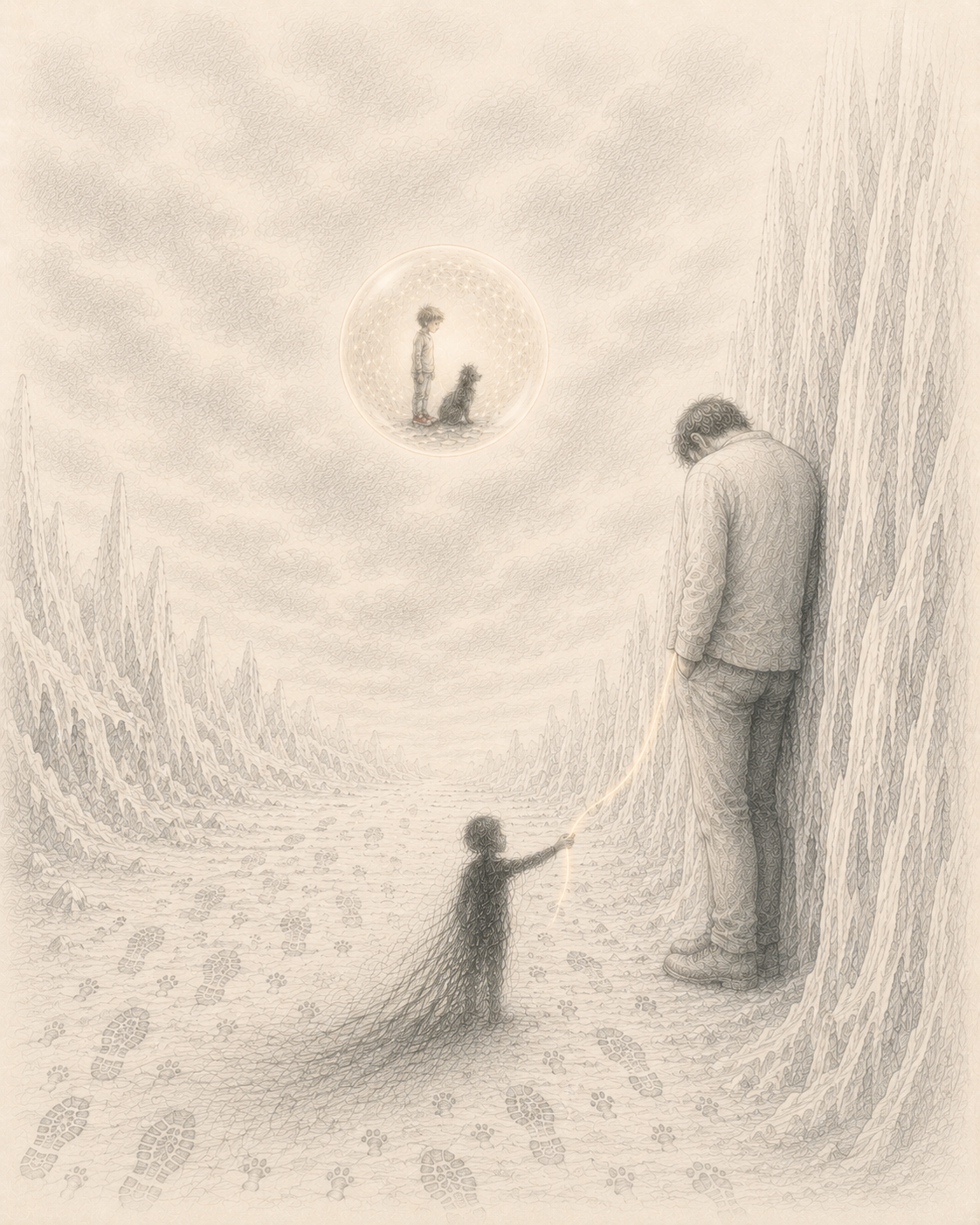
The Alcolà glacier
Little Solomon J. crosses the glacier inside a bubble, accompanied by his little dog Layla. The bubble keeps the bleak landscape out and keeps his light warm within, because he has known love, welcome, care and the presence of someone by his side. Below, the giant remains leaning against the wall of ice, and the child's psyche, his shadow, offers him a golden thread. This is the moment when Solomon J. understands his father's dependency: a cold world chosen as anaesthesia against emotions and feelings. The shadow hands him a thread of light, the inheritance of the son, and the scene invites us to recognise the true worth of what children hold within them.
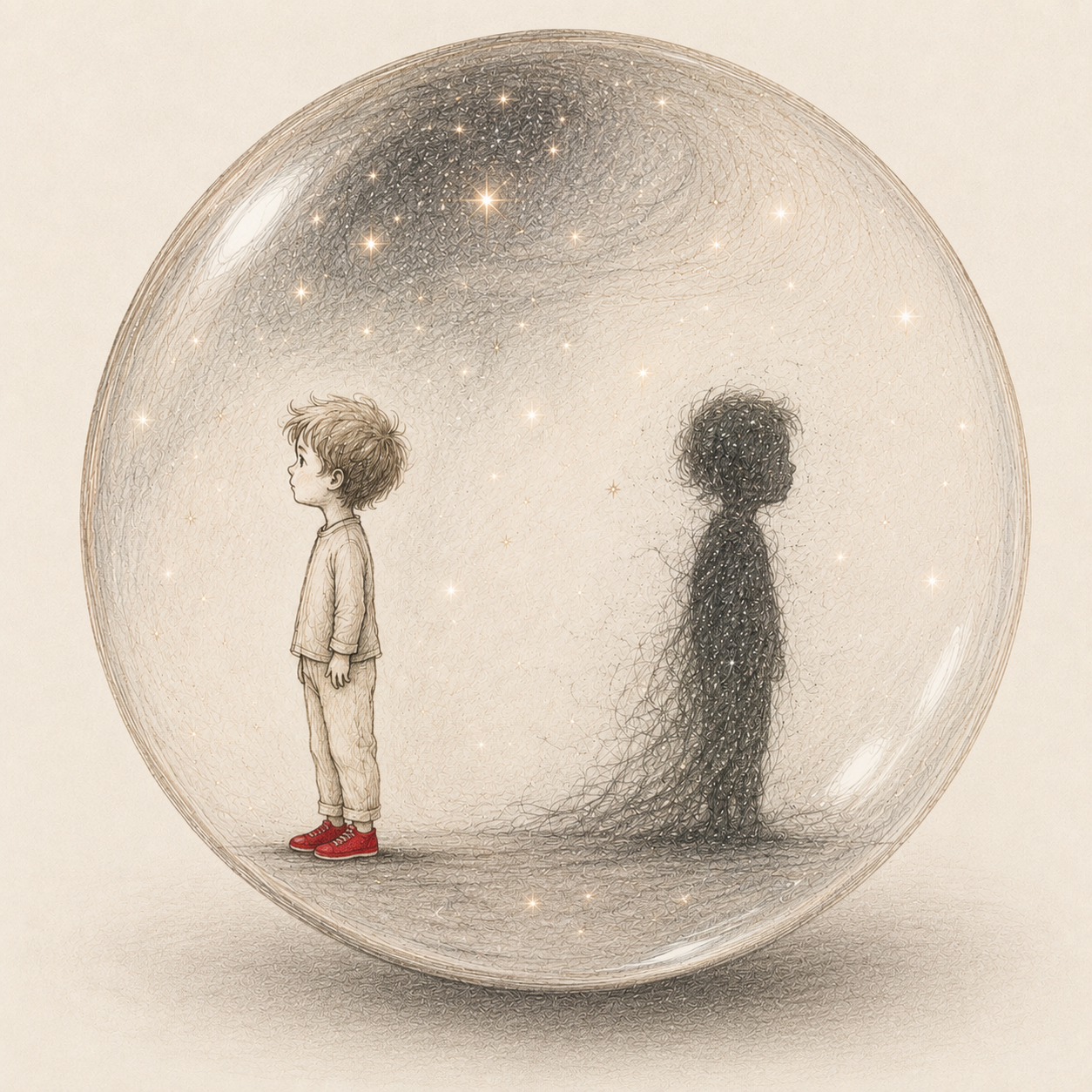
The bubbles of the story
The bubbles in Solomon J.'s story describe a very real mechanism: every day children withdraw into their own bubble, and it becomes hard for those close to them to know how to draw near. The image hints at the reason why: inside, they are confronting their own psyche and their own ghosts, demanding work even for an adult. Imagine what that means at their age. Here Solomon J.'s shadow breaks away from him and chooses a different direction: it goes to seek out what he has set aside to protect himself, because the psyche holds everything and forgets nothing. This is the start of a surprising adventure, and it is worth opening the book to discover where it leads.
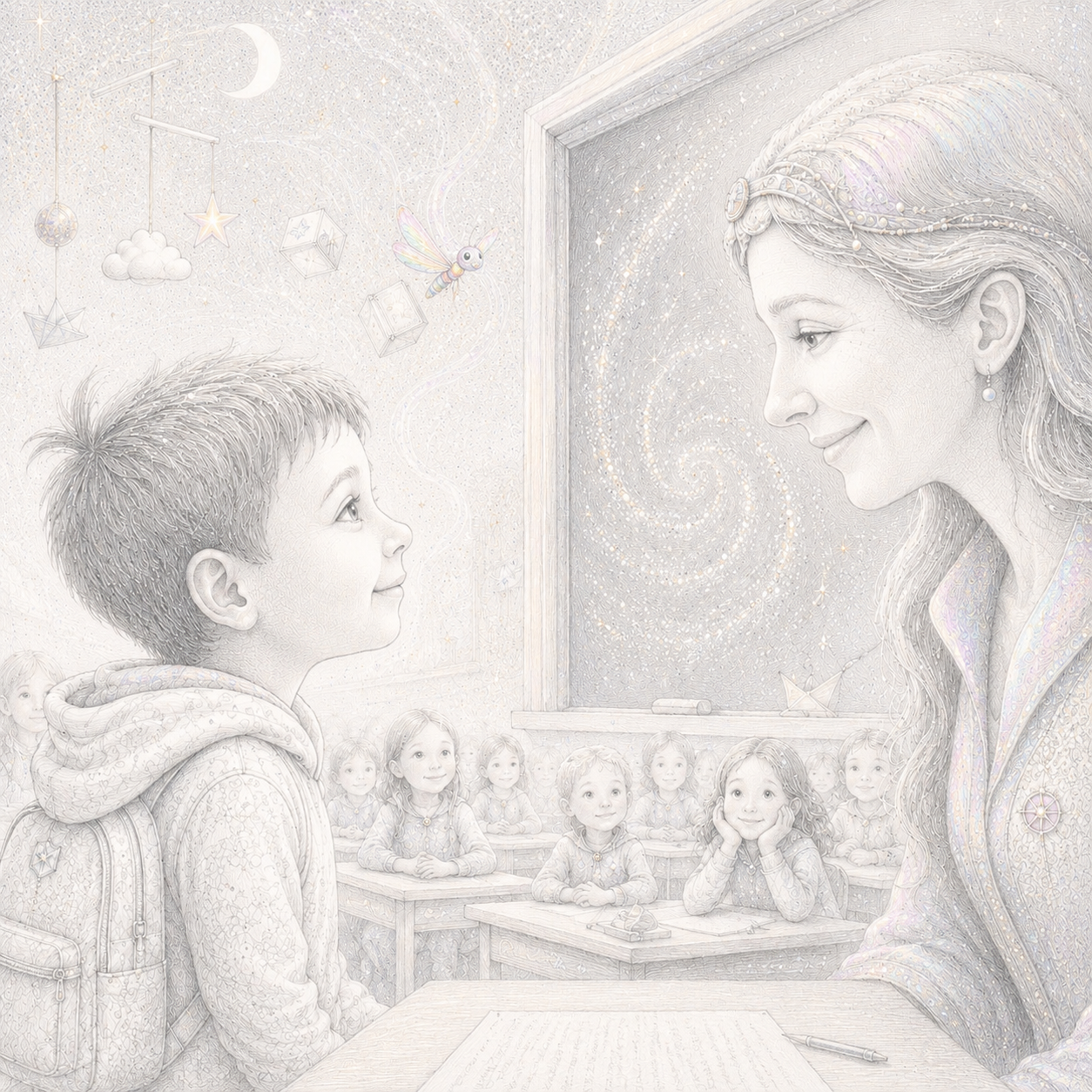
Pepilena Magna on a secret mission
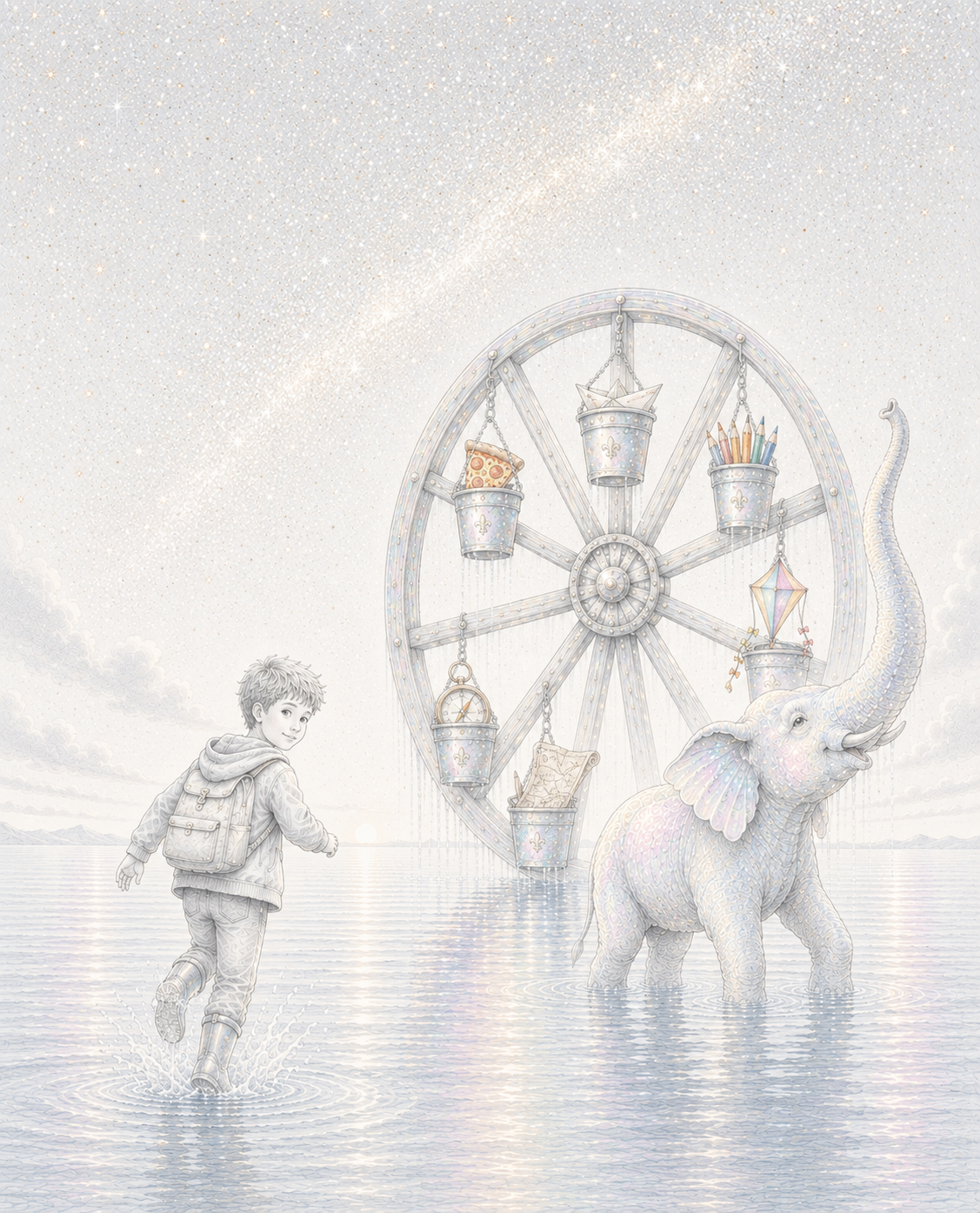
The bridges of Pepilandia
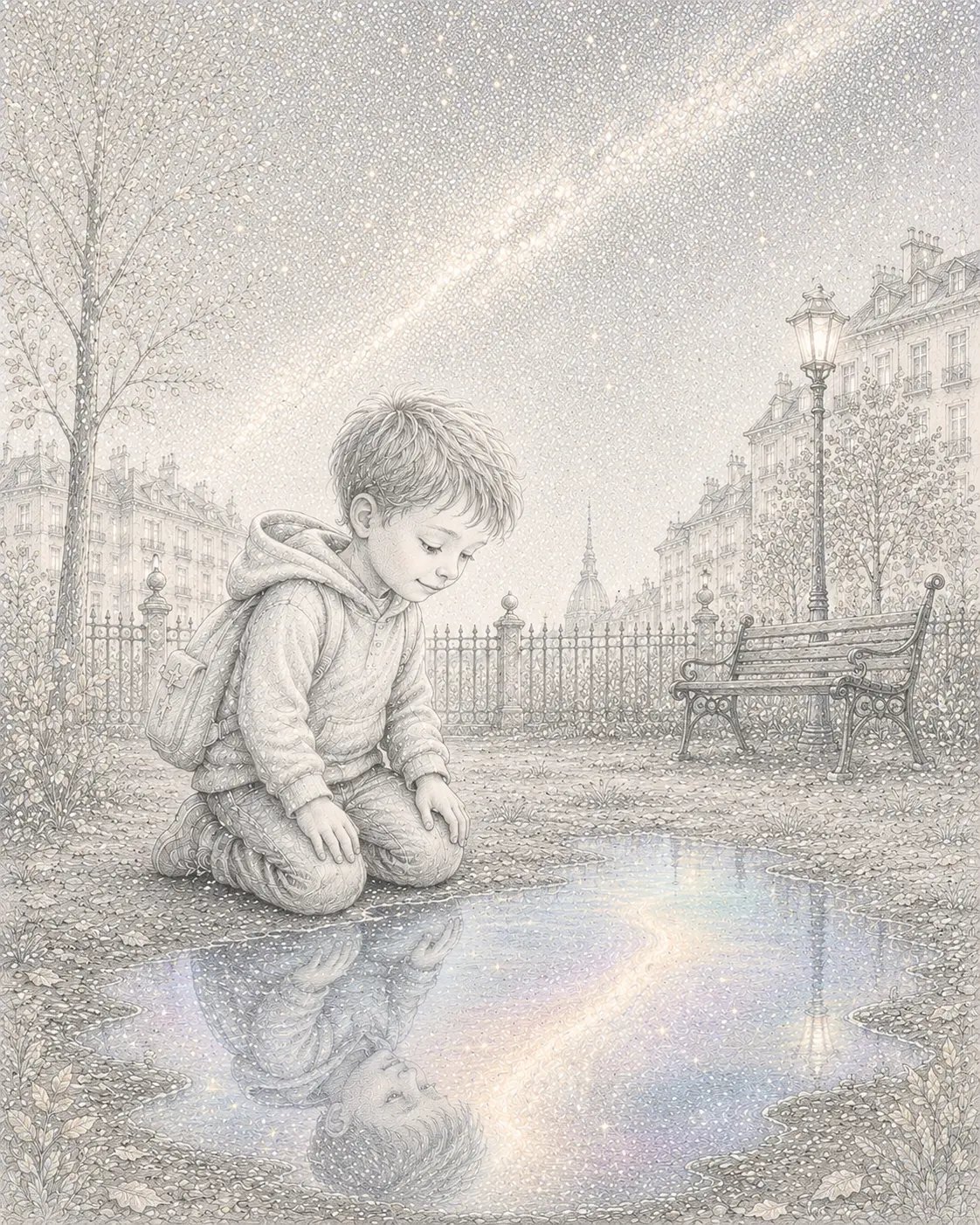
Being a Neuro-Splendente child