Skip to content

Addiction in the book

Talking to children about addiction, the Glacier of the Alcolà, where the cold becomes the natural condition

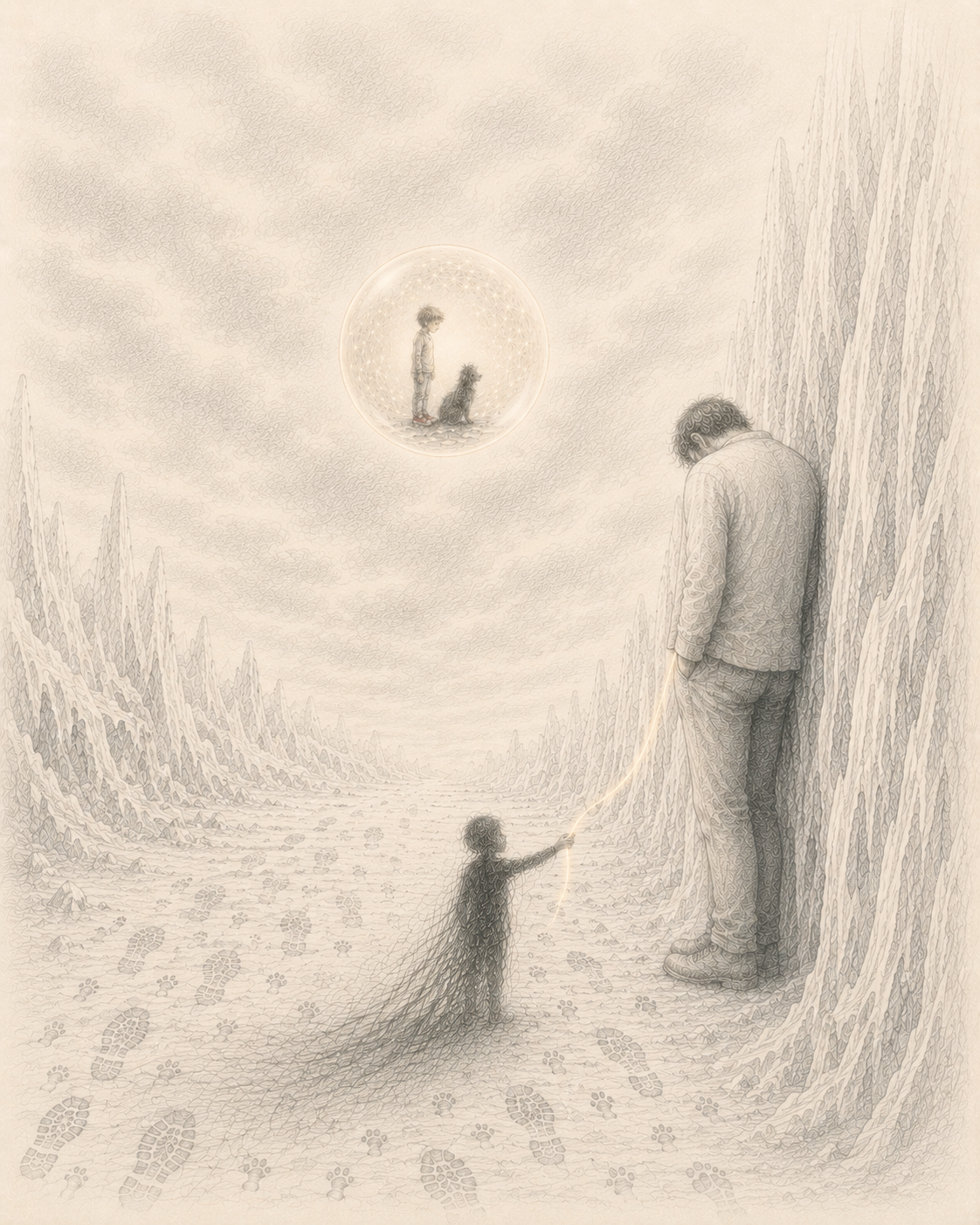
The Alcolà is a vast glacier, a world where the cold has become the natural condition of everything. The ice slows, stiffens, preserves and dulls the sensations: it is how the fairy tale makes visible the emotional anaesthesia. Here Solomon J. finds the Giant, his father, immersed in the frost.

Addictions, from alcohol to screens to relationships that wound, offer an immediate relief that carries away from the pain for a while. In time that same relief reaches joy, spontaneity, presence, the ability to inhabit one's own life fully.

Illustration: a figure from behind and a child of shadow joined by a luminous thread, with a bubble in the sky
Addiction as anaesthesia: a luminous thread still joins the absent adult and the child

Recognising the pain, distinguishing the destiny

Solomon J. watches the Giant immersed in the frost and understands, perhaps for the first time, that the distance between them has deep roots and predates his birth. He recognises the pain of the father and distinguishes it from his own destiny: there are paths that belong to adults and paths that belong to children.

The Alcolà welcomes people who, before addiction, had known their own winter. The symbol widens understanding and keeps responsibility whole: crossing the glacier and coming out of it belongs to those who live there. Solomon J. receives a different task, to find his own Shadow again and guard his own light.

How to use this metaphor with a child

The metaphor of the glacier leaves the child free to approach the parent's pain without having to solve it. It lets them say: the cold exists, it is real, and at the same time it is not your climate. Your road remains your own.

The book does not ask the child to save the Giant. It asks them to see him, to recognise him and to choose, for themselves, a direction. This is where the fairy tale becomes therapeutic: it names the truth and gives the child back their childhood.

Frequently asked questions

About the Glacier of the Alcolà and addiction

How do you explain alcoholism to children?

With a metaphor that keeps the truth whole without overloading the child. In the book, addiction becomes the Glacier of the Alcolà, a world where the cold has become the natural condition of everything. The child sees the frost and understands, without having to carry the weight of adult words.

What to say to a child with a dependent parent?

That the parent's pain belongs to the parent, and that the child's road remains their own. Solomon J. recognises the pain of his father, the Giant, and distinguishes it from his own destiny: there are paths that belong to adults and paths that belong to children.

What is the Glacier of the Alcolà?

It is the place in the tale where addiction takes shape. The ice slows, stiffens, preserves and dulls the sensations: it is how the fairy tale makes visible the emotional anaesthesia that accompanies addiction, from alcohol to screens to relationships that wound.

Is addiction a fault?

The book widens understanding and keeps responsibility whole. The Alcolà welcomes people who, before addiction, had known their own winter. Crossing the glacier and coming out of it belongs to those who live there. Solomon J. receives a different task: to find his own Shadow again and guard his own light.

Cross the Glacier of the Alcolà inside Solomon J.'s tale